
What to pack for a scuba diving trip:my checklist so I do not forget anything.
Preparing for a dive trip sounds simple until you start thinking about everything you might leave behind: dive computer, mask, boots, documents, batteries, compass, lights or small accessories.
You do not need to transport your entire setup. The key is bringing the personal equipment you want to control yourself and confirming in advance what the dive centre provides.
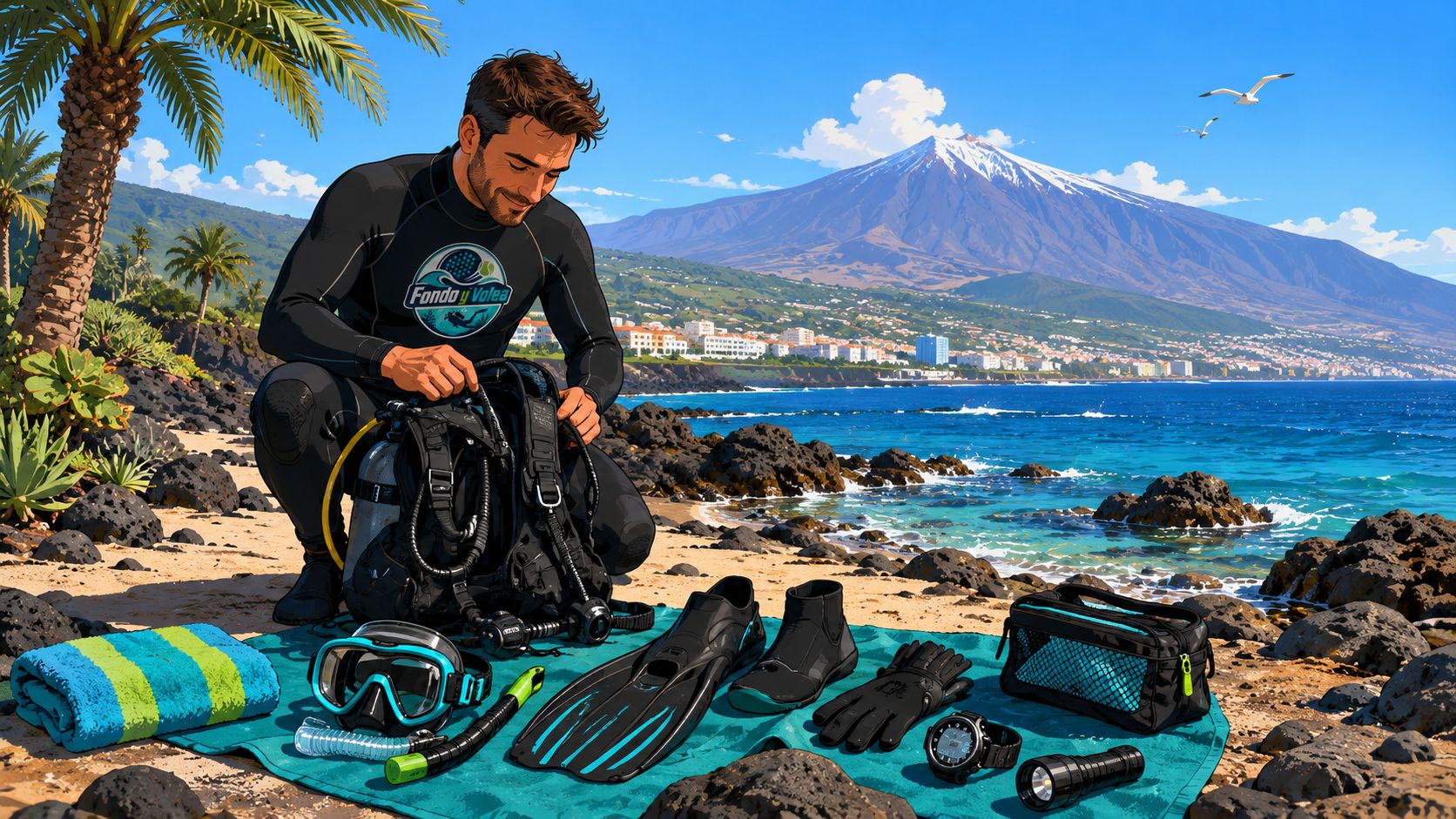
Quick scuba trip checklist
Personal gear I would bring with me
Dive computer
If you already own one, this is one of the items I would always bring. Using the same computer avoids having to adapt to unfamiliar screens or menus on every trip.
I use the SCUBAPRO Aladin One Matrix, and it is the computer I know best after around 20 dives.
Your own mask
A mask is one of the most personal pieces of scuba gear. If you already know a model fits you well, bringing your own means you do not depend on unfamiliar shapes or sizes at your destination.
I use the Mares X-Vision Ultra LiquidSkin, which I have used for around 15 dives.
Dive boots
They add comfort, warmth and hygiene. They are especially useful if the entry involves walking over rocks, sand, docks or uneven surfaces.
I use the Aqualung Echozip Ergo 7 mm and particularly value the thick sole and thermal protection.
Flexible snorkel
It takes up very little room, weighs little and is easy to pack inside a dive bag. If you already have one you are comfortable with, there is little reason to depend on a different one at your destination.
Compass
If you plan to practise underwater navigation, bringing the compass you normally use makes reading easier and avoids adapting to a different bezel, size or layout.
Dive torch and marker light
They do different jobs. The main torch illuminates the environment; a marker light helps your buddy, group or guide locate you more easily.
If I know the trip includes night dives, I would check both before leaving and pay particular attention to batteries and charge levels.
Other accessories that may make sense
- Mask strap cover: takes up almost no space and can improve comfort.
- Gloves: depend on water temperature, conditions and local rules.
- Cutting tool: useful for rope, fishing line or nets, strictly as a safety item.
- Wet-gear bag: helps separate equipment after the dive.
- Small spares: only the items you actually know how to use.
Practical things I would always bring
They are not diving equipment, but they are very useful once the dive is over.
Documents I would check before travelling
Requirements can vary by destination, dive centre and activity, so I would confirm in advance exactly what they need.
- ID card or passport.
- Dive certification.
- Dive insurance when required.
- Medical declaration or documentation if needed.
- Emergency contact details.
- Booking details and dive centre information.
What gear can be rented at your destination?
If you are diving with a centre, bringing every bulky item is not always worthwhile. I would confirm what the rental includes and the condition of the available equipment.
- Wetsuit.
- Fins.
- BCD.
- Regulator.
- Tank.
- Weights.
What I would check the day before
- Dive computer battery level.
- Operation of the torch and marker light.
- Mask and strap condition.
- Boot zips, soles and general condition.
- All required documents are ready.
- Exactly what equipment the dive centre provides.
- Any gear being packed is clean and dry.
What I would personally bring
If I travelled now to dive with a centre, I would bring the lightweight equipment I already know well: computer, mask, boots, snorkel, compass and the lights I need if night dives are planned.
I would decide on the rest based on the type of trip, number of dives and how convenient it is to transport everything.
- Leaving all checks until the last minute.
- Bringing gear you do not know how to use.
- Transporting more equipment than you need.
- Packing gear while it is still wet.
- Not confirming what the dive centre includes.
FAQ: what to pack for a scuba diving trip
What is essential to bring?
It depends on what the centre provides. If I already own personal gear, I would prioritise my computer, mask, boots and the required documentation.
Do I need to bring all my own gear?
No. On many trips it is easier to bring personal items and rent the wetsuit, regulator, BCD, tank, weights or even fins.
What would I inspect most carefully?
Especially the computer, lights, mask and anything that depends on a battery, charge or small component.
Would I use brand-new gear for the first time on a trip?
If I can avoid it, no. The more important the component, the more useful it is to become familiar with it beforehand.
Final checklist before you leave.
My goal would not be to bring as much gear as possible. It would be to arrive with what I genuinely need, know my personal equipment and avoid simple mistakes that could complicate the dive.